Saturday, 20 June 2015

Friday, 19 June 2015


Thursday, 18 June 2015
Preliminary Task - Analysing a Music Video
As part of our preliminary task, it is necessary to analyse a music video of a genre similar to that of our chosen song. Me and Nicole will be working together and have decided on the song Swingin' Party by Lorde.
Described as 'indie-pop', Lorde's music is not dissimilar to that of Halsey - an artist I am looking to use in my final project. Due to the likeness in genre, I have decided to analyse the music video for Hurricane by Halsey.
Song Genre:
The target audience of the indie-pop genre is typically young people of both genders. This is reflected through the actors used in the video as they all fit this profile. Using actors that are representative of the target audience means they are more likely to enjoy the video as they can relate to it and see themselves in the scenario.
Camera Shots/Movements/Angles:
The majority of the shots appear to be filmed with a handheld camera, made evident through the instability and off-centred shooting of some clips. This ties in with the indie genre as it prevents the video from appearing overly produced and maintains a sense of realism. The video opens with a wide shot to establish the setting of the video. Subsequently, medium and long shots are used to introduce the viewers to the characters in the video, as well as giving them more information about the setting. Over the shoulder shots are used to create a sense of relationship between characters, while close ups are used heavily to emphasise the characters' facial expressions and reactions. At one point, a point of view shot is also utilised in order to place the characters in their setting. Tracking shots are also used in order to create smooth transitions when coupled with straight cuts in the editing process.
 |
| Establishing Shot |
 |
| Wide Shot |
 |
| Wide Shot |
 |
| Close Ups |
 |
| Over the Shoulder |
 |
| Point of View |
Editing Transitions:
The editing of this video is very simplistic through the use of straight cuts. This is a typical editing transition of the indie genre as it furthers the impression that the video is not overly produced. A soft focus is also used throughout the video, creating a calm and subdued atmosphere. A short clip of a television flickering is used, adding a conceptual element to the video. Through the quick, straight cuts, this shot does not take away from the narrative. Slow motion is regularly used within the video, creating the illusion that time is going slowly for the characters. This is juxtaposed with the video's ending; the editing quickens, and the subject of the clips also portray a sense of urgency. The final frame of the video is of a black screen with text reading 'TO BE CONTINUED'. This leads on to the artist's next music video, Ghost (Room 93 Version), and furthers the storyline. In doing so, curiosity is built and encourages viewers to look at the artist's other work.
 |
| Slow Motion |
 |
| Faster Editing Style |
 |
| Soft Focus |
 |
| Conceptual Element |
 |
| The Ending |
Mise-en-Scene:
The clips in this video have been desaturated in the editing process, creating a muted and subdued colour scheme for the video. As well as matching the narrative, the dulled colour palette is also typical of the indie-pop genre. This is a technique I will keep in mind when creating my final video as I believe it represents the genre well.
The colours in the video include yellow, white, pale pink and pale blue and their connotations infer deeper meaning to the narrative. The males in the video are all wearing outfits that predominantly feature the colours yellow, while the females are mainly styled in pink and white. The yellow may be interpreted as symbolising youth, a theme that is later made apparent through the use of props. The protagonist has bleached white hair, suggesting a sense of false innocence, while her two female friends have dyed pink hair which may infer both femininity and rebellion. The group of girls are first seen in the video perched on top of a pastel pink car, furthering the significance of their relationship with the colour pink.
Towards the end of the video, the phrase "Never forget Summer 97" is written on a bed frame. The clothing worn by the characters is representative of the 90s era, as crop tops, tie dye and denim jackets are all trends that were prominent at this time. However, the 90s styling of the video still engages and relates to a modern audience due to 90s styles coming back into mainstream fashion.
Props are used throughout the video to present different things. The polaroid camera reflects the time period in which the video is set, while props such as the skateboards, bikes and the bottle of alcohol symbolise youth, supporting the prominent use of the colour yellow. The protagonist is also seen writing in a notebook, representing her childlike innocence.
The video follows the group of young people around various locations in a Brooklyn neighbourhood. These locations include a disused car scrap yard and a rundown motel and follow the conventions of indie videos by furthering the desolate atmosphere. By setting the video in regular places, it allows the video to remain its humble appearance and allows viewers to relate to it.
 |
| Use of Colour: Yellow |
 |
| Use of Colour: Pink |
 |
| Time Period |
 |
| Props: Skateboards |
 |
| Props: Alcohol |
Dominant Ideologies:
Ideologies are a system of ideas and ideals that are widely accepted as the way things are. However, these norms, values, ideas and beliefs evolve and develop over time and are not limited to remaining static. A historical example of how ideologies have changed would be the perception of women as they have become more equal in society. The dominant ideology of this music video would be that teenagers are rebellious and delinquent as they indulge in underage smoking and drinking, however this viewpoint does not apply to all youths.
Intertextuality:
Intertextuality is the process of creating references to another media text. The music video for 'Ghost (Room 93 Version)' has elements of textuality with the music video I have chosen to analyse. It incorporates clips and develops them into flashbacks, making it clear that it follows on from this music video. However, I do not believe there is any intertextuality in the Hurricane music video. This may be due to the music video falling under the indie-pop genre - a genre that does not tend to associate itself with the mainstream media.
Audience Reception:
Stuart Hall proposed the theory of encoding and decoding. This theory states that the producer encodes meaning in a certain way, while the reader decodes and interprets it differently. Hall also went on to demonstrate three ways an audience may read a media text. The theory of preferred reading refers to when the audience reads the text the way the author intended. Negotiated reading is when an audience reads the text the way the author intended, but also uses personal experiences, interests and beliefs to modify their interpretation. Thirdly, the oppositional theory is where the reader's social position means that they have an opposing relation to the text and therefore reject the reading. For the Hurricane music video, I believe the preferred reading theory is most relevant as there is a linear narrative for the audience to follow. The negotiated reading theory may also be applicable as the viewer may use their personal experiences to interpret the video differently. The music video has been interpreted to be about avoiding attachment to both people and locations which may be relatable to the song's target audience.
Uses & Gratifications Theory:
This theory suggests that audiences are not passive, serving as an opposing perspective to the Hypodermic Needle Theory. The theory states that audiences take an active role in choosing certain medias to meet their needs. It focuses on what people do with media as opposed to how the media affects them. Audiences would watch this music video to satisfy their need for entertainment due to the gripping storyline. The "to be continued" frame at the end of the video maintains the attention of the viewer and encourages them to watch the second part.
Andrew Goodwin's Theory:
Elements of Goodwin's theory are applicable to this music video as it does express genre characteristics. The indie-pop genre often use a desaturated colour palette and include elements of both narrative and concept - features that are present in the Hurricane music video. However, the artist of the song is not featured in the video, the video does not include intertextual references and there no clear links between the visuals and the lyrics.
Laura Mulvey's Theory:
Mulvey's 'Male Gaze' theory outlines the ways women are presented in media texts. This theory is made up of three main aspects.
- How men look at women,
- How women look at themselves,
- How women look at other women.
The theory states that, in film, audiences have to view characters from the perspective of a heterosexual male. Mulvey believes that the camera lingers on the curves of the female body, and the events that happen to her afterwards are predominantly based upon the male's reaction to this. Women are also heavily objectified. Female viewers must then experience the narrarive secondarily, through identification with the male on screen.
I don't believe that Mulvey's theory is applicable to the Hurricane music video as the female body is not focused on at any point. The focus of the video remains on the storyline between the characters, as opposed to their physicality.
Levi Strauss: Binary Opposites:
Strauss argued that the way we understood certain words depends mainly on our understanding of its opposite. He suggested 'binary opposites', an example of which would be a hero and villain. I don't think that this theory can be applied to the Hurricane music video as the characters within the video appear to be on the same level. However, in the second music video I have previously mentioned, Ghost (Room 93 Version), there is further character development which may support this theory.
Wednesday, 10 June 2015
Concept Music Videos
Concept videos are based around an unusual or obscure idea that may even be surreal for the audience. A successful concept video will keep the audience entertained for the entirety of the video and constantly looking at who or what is on screen. Many concept videos will also combine aspects of other video genres to widen an otherwise niche market. Concept videos often utilise a particular filming or editing technique and convey a metaphorical message.
Some examples of concept videos include:
As well as symbolic, conceptual videos can take the route of being thematic. This is portrayed through the mise-en-scene to suggest the genre or meaning of the video. I Don't Love You by My Chemical Romance uses a monochromatic palette and thus infers the mood and atmosphere of the song to the audience. Performance elements are also incorporated to engage the audience.
Some examples of concept videos include:
- Sia - Elastic Heart
- Panic! At The Disco - That Green Gentleman
- Taylor Swift - Style
- Gotye - Somebody That I Used To Know
- OK Go - This Too Shall Pass
Many concept videos will incorporate aspects of the performance genre, usually by using shots of the artist lip synching the song to intercept the conceptual clips. While concept videos usually maintain the interest of viewers, they are unlikely to appeal to a mainstream audience without elements of more niche genres. Taylor Swift is featured throughout her music video for Style, thus creating a sense of familiarity for audiences. Close up shots of Taylor lip-synching are used to tie greater importance to the lyrics. The same is true for videos like Gotye's Somebody That I Used To Know. Often, the lyrics and the concept of the video seem unrelated - for example, the video for This Too Shall Past by OK Go. By combining the concept and performance genres, the musician can explore their artistic visions while still appealing to a bigger audience.
 |
| Taylor Swift - Style |
 |
| Gotye - Somebody That I Used To Know |
 |
| OK Go - This Too Shall Pass |
Conceptual videos do not always feature the artist and instead focus predominantly on a theme or message to portray. The video for Under Pressure by Queen exemplifies this category, highlighting the social decay of the 1900's. Shots of demolished buildings and crowds of unemployed citizens clearly demonstrate this message while also reflecting the lyrics of the song. An example of a concept video where the artist is not the main focus of the video would be Lying Is The Most Fun by Panic! At The Disco. The band are only in one scene of the music video, and even then are not the focal point of the video.
 |
| Queen - Under Pressure |
 |
| Panic! At The Disco - Lying Is The Most Fun |
As well as symbolic, conceptual videos can take the route of being thematic. This is portrayed through the mise-en-scene to suggest the genre or meaning of the video. I Don't Love You by My Chemical Romance uses a monochromatic palette and thus infers the mood and atmosphere of the song to the audience. Performance elements are also incorporated to engage the audience.
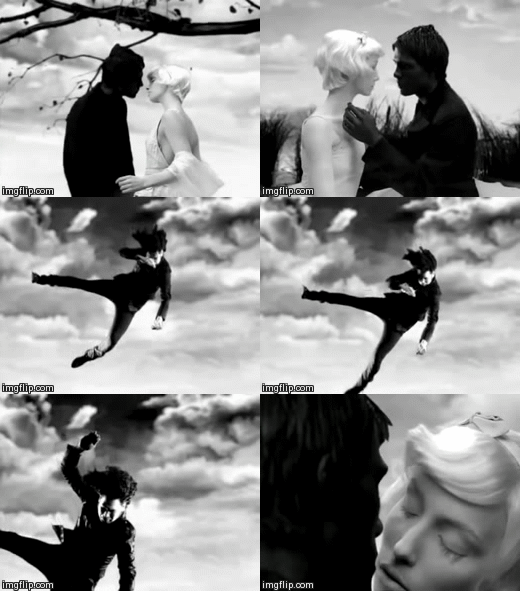 |
| My Chemical Romance - I Don't Love You |
Saturday, 6 June 2015
Narrative Music Videos
Narrative music videos feature a visual story that is easy to follow. Unlike performance videos, narrative videos do not include much or any lip synching. For those that do include some lip synching, the lack of stage equipment makes them easily distinguishable from performance videos. Narrative videos may mimic a film genre and include the artist as either an observer or a part of the narrative.
Some examples of narrative music videos include:
It is common for narrative videos to also incorporate other genres. Many include elements of the performance genre by using shots of the artist performing the song to intercept the narrative. This is seen in videos such as Panic! At The Disco's 'But It's Better If You Do'.
Despite being present in the 'Give Me Love' music video, there are no shots of Ed Sheeran performing the song. He acts as an observer, thus drawing greater emphasis to the storyline and away from himself.
Narrative music videos often use analepsis to maintain the audience's interest. This is evidenced by such music videos as Taylor Swift's 'I Knew You Were Trouble' and Ed Sheeran's 'Give Me Love'.
'I Knew You Were Trouble' opens with the artist waking up in the middle of a deserted festival ground. Short clips of the events that occurred prior to this are flashed on screen intermittently, engaging the audience as they wish to find out what happened. Similarly, 'Give Me Love' opens with the protagonist lying dead in a pool of her own blood. This hooks the audience from the outset of the video and gives them a reason to continue watching.
Some examples of narrative music videos include:
- Royal Blood - Figure It Out
- Ed Sheeran - Give Me Love
- Rudimental - Waiting All Night
- The All-American Rejects - Gives You Hell
Narrative music videos may tell a story that reflect the genre of the song and its lyrics, or they may portray a story that is seemingly irrelevant. Within these stories, the artist will often feature in the video - whether this be as an observer or as a character. The lead singer of The All-American Rejects stars as two of the characters in the video for 'Gives You Hell'. Contrastingly, the videos for Royal Blood's 'Figure It Out' and Rudimental's 'Waiting All Night' do not feature the artist at all. This draws greater emphasis to the story the video is depicting.
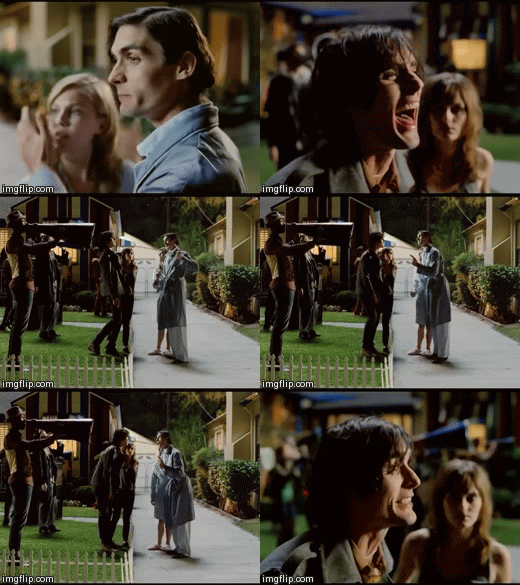 |
| The All-American Rejects - Gives You Hell |
 |
| Royal Blood - Figure It Out |
 |
| Rudimental - Waiting All Night |
While the Waiting All Night music video is, arguably, irrelevant to the genre and lyrics of the song, it engages the audience as they want to follow the protagonist's journey.
It is common for narrative videos to also incorporate other genres. Many include elements of the performance genre by using shots of the artist performing the song to intercept the narrative. This is seen in videos such as Panic! At The Disco's 'But It's Better If You Do'.
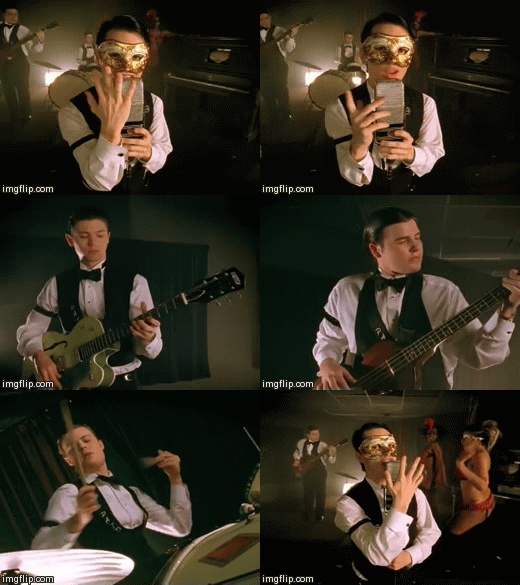 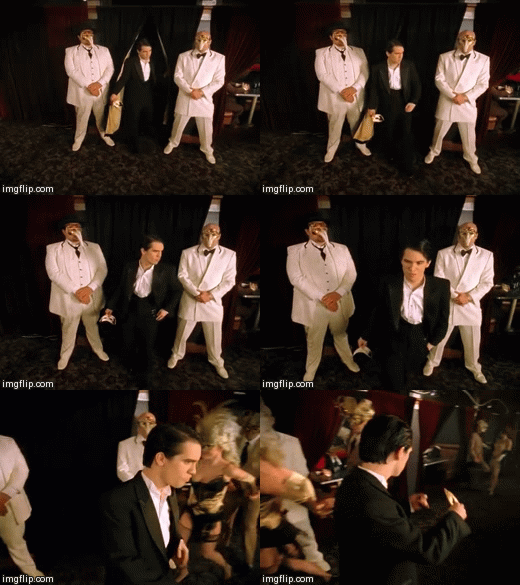 |
| Narrative (left) and performance (right) in 'But It's Better If You Do' |
Despite being present in the 'Give Me Love' music video, there are no shots of Ed Sheeran performing the song. He acts as an observer, thus drawing greater emphasis to the storyline and away from himself.
 |
| Ed Sheeran - Give Me Love |
Narrative music videos often use analepsis to maintain the audience's interest. This is evidenced by such music videos as Taylor Swift's 'I Knew You Were Trouble' and Ed Sheeran's 'Give Me Love'.
'I Knew You Were Trouble' opens with the artist waking up in the middle of a deserted festival ground. Short clips of the events that occurred prior to this are flashed on screen intermittently, engaging the audience as they wish to find out what happened. Similarly, 'Give Me Love' opens with the protagonist lying dead in a pool of her own blood. This hooks the audience from the outset of the video and gives them a reason to continue watching.
  |
| Taylor Swift - I Knew You Were Trouble (left) and Ed Sheeran - Give Me Love (right) |
Wednesday, 3 June 2015
Performance Music Videos
A performance music video is one that predominantly features the artist performing the song to the camera. Usually, the artist will lip-synch the lyrics but this is not always the case. Recordings from live performances also fall under this category. This style of video uses lots of close ups of the artist, creating a direct mode of address with the audience.
Some examples of performance music videos include:
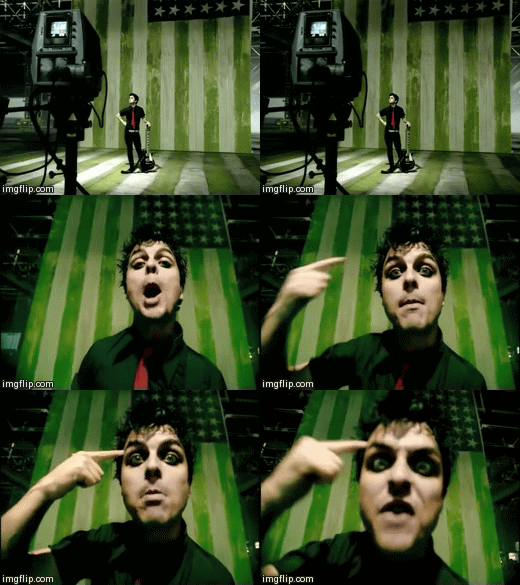
Performance videos often use close ups to emphasise the iconography of the video, connoting the music genre to the audience. The video for Green Day's 'American Idiot' opens with close ups of the band. This clearly demonstrates iconography associated with the punk rock genre - black clothing, dark eye make-up and guitars.
Some examples of performance music videos include:
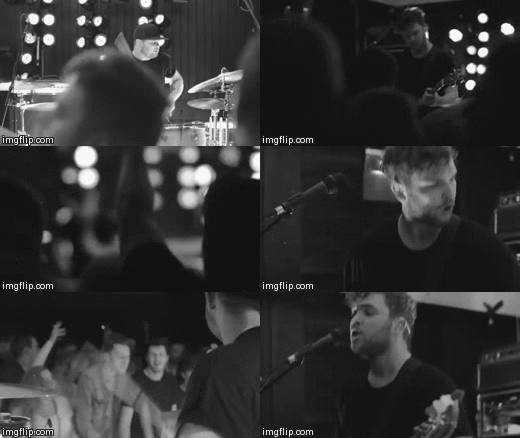
- Royal Blood - Little Monster
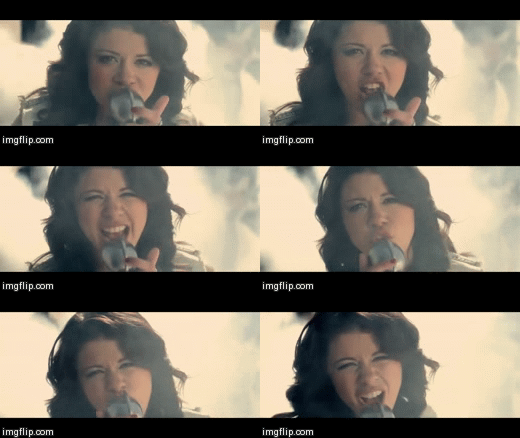
- We Are The In Crowd - The Best Thing
- Green Day - American Idiot
- Taylor Swift - Red
Performance music videos often use shots of the audience to emulate the atmosphere of the artist's live shows and to add a sense of involvement. It captures the energy and enthusiasm of live fans, thus promoting their performances.
 |
| Blink-182 - The Rock Show |
 |
| Royal Blood - Little Monster |
Performance videos often use close ups to emphasise the iconography of the video, connoting the music genre to the audience. The video for Green Day's 'American Idiot' opens with close ups of the band. This clearly demonstrates iconography associated with the punk rock genre - black clothing, dark eye make-up and guitars.
 |
| Green Day - American Idiot |
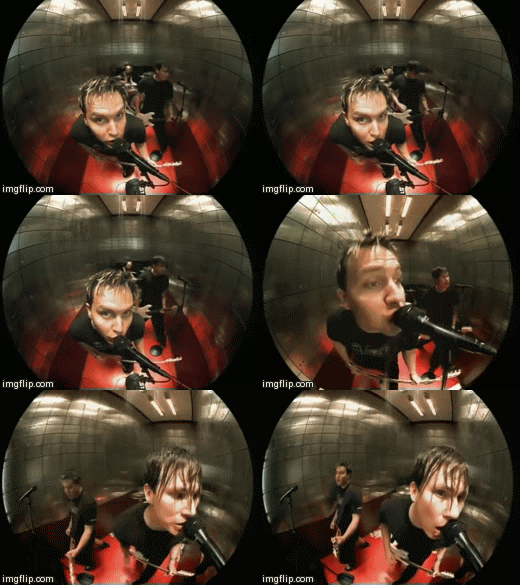
Additionally, many performance videos use a direct mode of address towards the audience. Close ups of the performer looking straight into the camera engage the audience and allow them to feel connected with the artist.
 |
| We Are The In Crowd - The Best Thing |
 |
| Blink-182 - Rock Show |
 |
| Green Day - American Idiot |
'Behind-the-scenes' shots of the performer in real life situations are used in performance videos. These range from the artist warming up to making their way to the stage.
 |
| Royal Blood - Little Monster |
 |
| Taylor Swift - Red |
Shots of the artist performing in an unusual setting is also common of performance music videos. In doing so, the music video is more entertaining for the viewer while also being memorable.
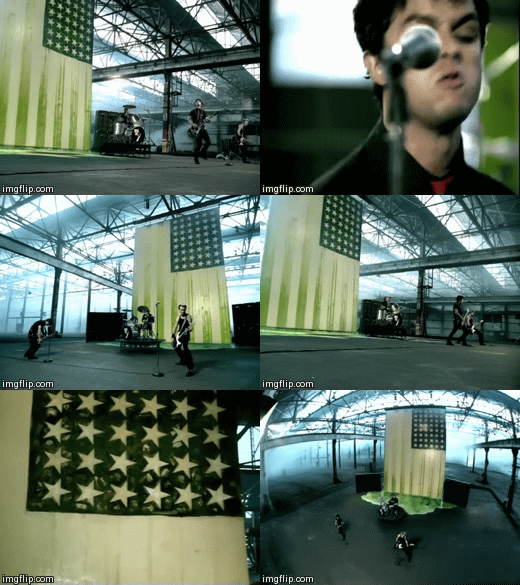 |
| Green Day - American Idiot |
'American Idiot' is set in a disused warehouse, tying in with the iconography for the music genre.
This video stands out to audiences as a desert is an unusual place to film a music video. The dust flying up also helps to create atmosphere
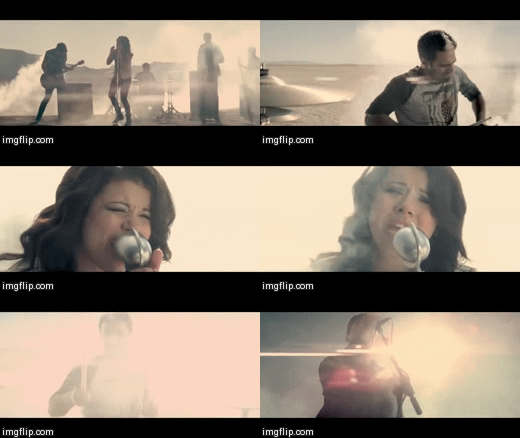 |
| We Are The In Crowd - The Best Thing |
Tuesday, 2 June 2015

Subscribe to:
Posts (Atom)